You probably don’t need to. When you do, the rules are shorter than the ritual suggests.
Decanting solves two problems and creates one. The two problems are sediment (in older bottles) and tightness (in young, structured wines that haven’t yet opened up). The problem it creates is over-aeration of wines that were doing fine.
When to decant
Old reds with visible sediment: yes, slowly, with a torch behind the neck. Young, tannic reds — most Bordeaux under ten years, most Ningxia Cabernet, most Barolo under fifteen — yes, an hour ahead of the meal. Young reds that are already approachable (Beaujolais, Pinot Noir, most Malbec): probably not.
White wines: rarely. Old white Burgundy, the occasional very serious German Riesling — and even then, twenty minutes in a wide glass usually does the same job.
What to use
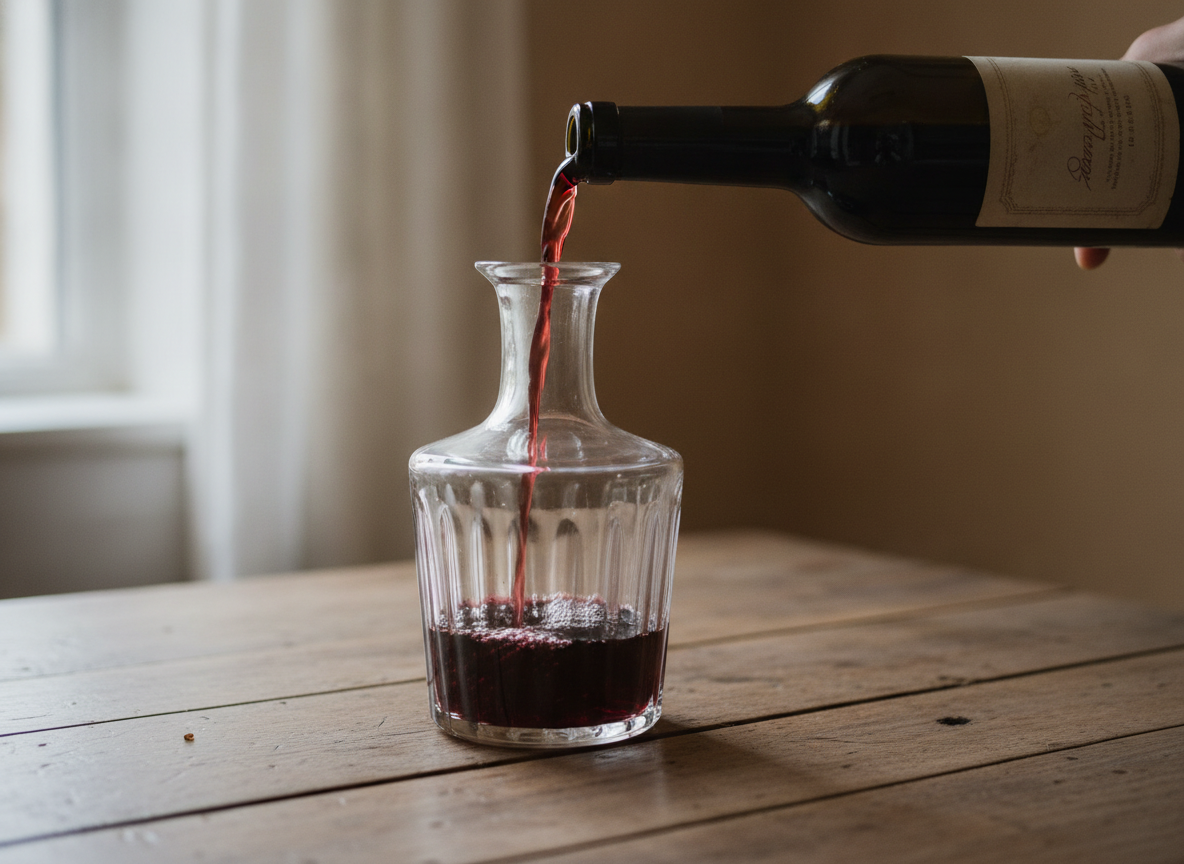
The decanter shape matters less than people make it. A wide-base decanter exposes more surface to oxygen, which is what you want for young reds. A narrow ship’s decanter limits oxygen, which is what you want for old reds you want to show without bruising. Anything roughly in those two shapes works. The cut crystal is for the photograph.
How long
Most young reds want forty-five minutes to ninety. After two hours, you’re losing more than you’re gaining. Old reds, by contrast, want twenty minutes at most — they came out of the bottle ready, and they fade quickly in air.
If you forget to decant: pour the wine, swirl the glass, and wait. The glass is a small decanter. It works.