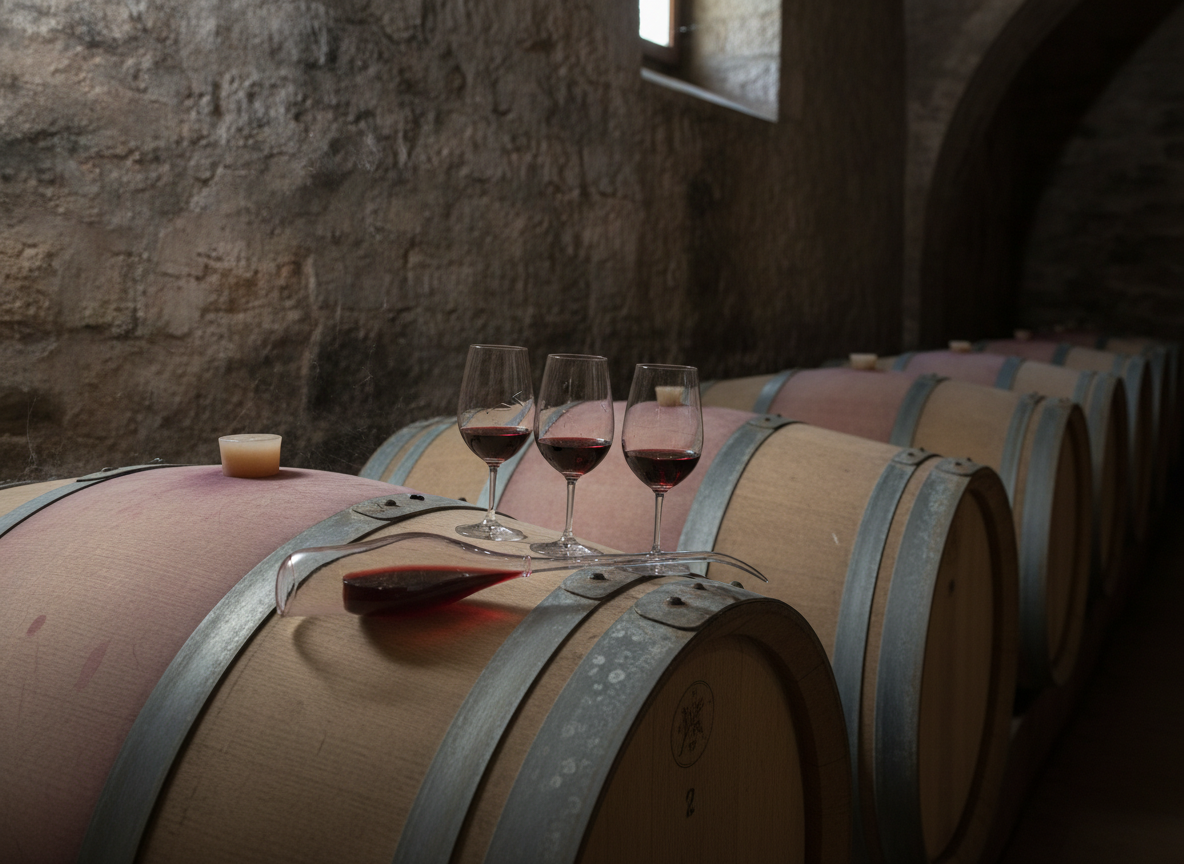
How Bordeaux sells wine in barrel — and why the system survives.
Each spring, the major Bordeaux châteaux invite the trade to taste their most recent vintage roughly six months after harvest, while the wine is still in barrel. Buyers commit to purchase futures at that point, with the wine delivered roughly two years later, after bottling.
The system has an obvious tension: tasters are evaluating wine that hasn’t finished its élevage, predicting how it will turn out. The argument in its favour is that it lets châteaux release wine before bottling, smoothing cash flow, and lets buyers secure allocations of in-demand vintages at the producer’s opening price.
Who buys this way
Historically, the Bordeaux négociant system handled most en primeur purchases — the châteaux sold to négociants, who sold to importers, who sold to merchants and collectors. The chain has shortened in recent years, but the underlying mechanic is the same: you commit early, you pay at release, you take delivery later.
When it works, when it doesn’t
En primeur works best in vintages where the opening price is well below the eventual market price. In weaker vintages, or in markets where critic scores fall short of expectations, futures buyers can find themselves holding wine that is cheaper to buy on release than it was to commit to in barrel. The 2011, 2013, and 2014 vintages each saw versions of this pattern.
What it means for buyers
For most buyers, bottled wine at a known price is the simpler route: you can see the finished wine and its reviews before you pay. En primeur suits collectors who are comfortable waiting two years for delivery and accepting the risk that the release price may not rise.