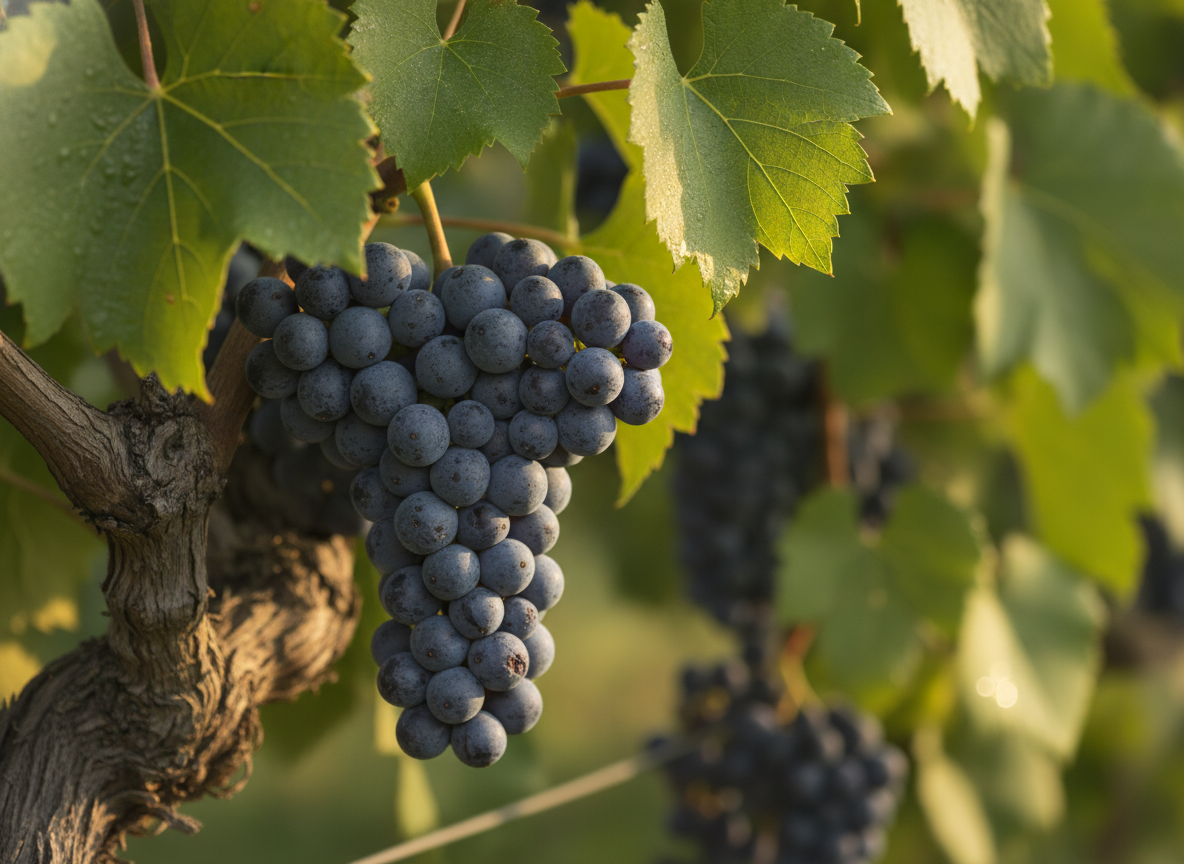
A 1961 cross from the Languedoc, planted as insurance, that has become the most interesting red grape in China.
Marselan is a Cabernet Sauvignon × Grenache cross created in 1961 by the French ampelographer Paul Truel, near the town of Marseillan. It was meant to combine Cabernet’s tannin and structure with Grenache’s heat tolerance. In southern France it never quite caught on — the wines were correct but unremarkable.
In China, something else happened.
Why China suits it
Marselan was planted across Ningxia and Hebei in the late 1990s primarily as a hedge — it ripens reliably in continental climates and resists mildew. The expectation was that it would be a workhorse blending grape. Instead, vinified on its own, it produced wines with a recognisable character: medium-deep colour, soft but present tannin, dark berry fruit, and a peppery, almost garrigue-like top note that nobody in France had ever quite gotten out of it.
The combination of altitude, dry continental ripening, and meticulous canopy management seems to bring out something in Marselan that the south of France does not. Why exactly is still debated, but the wines are now winning international competitions and prompting French producers to revisit their own plantings.
What it tastes like
A good Chinese Marselan has the structure of Cabernet without the austerity. Think dark plum, blackberry, a hint of cracked black pepper, and a savoury herbal lift on the finish. The tannin is fine and present but not aggressive. Most are drinking well at three to seven years, and the best (Grace Vineyard, Silver Heights, Kanaan) will go ten or twelve.
The bottle to try
If you’ve never had one, Grace Vineyard’s Tasya’s Reserve Marselan is the most confident introduction. It is one of the most consistent examples of the style and travels well in warm climates. Drink it with lamb, a Sichuan dry-pot, or anything with cumin.