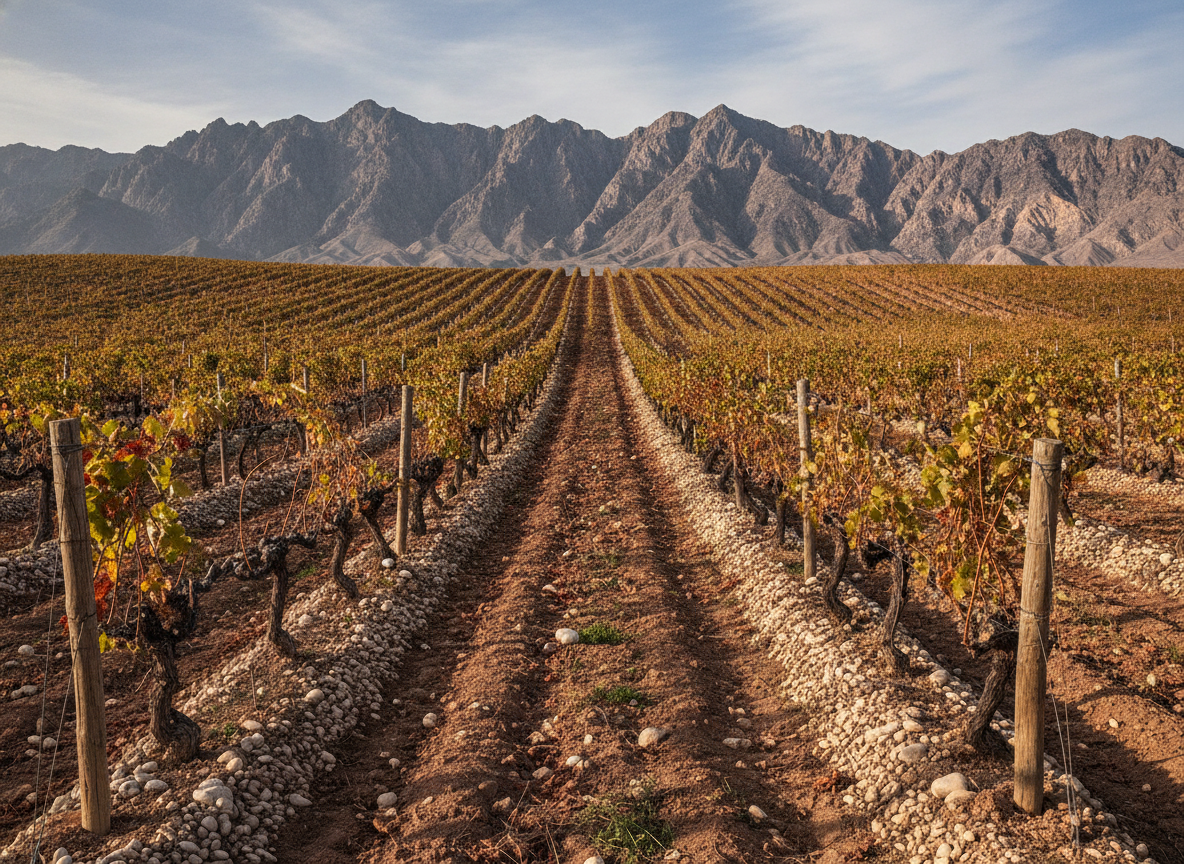
China’s most celebrated wine region sits in the dry foothills of the Helan Mountains, on the edge of the desert.
Ningxia is a small autonomous region in north-central China. Its wine country runs along the eastern foothills of the Helan Mountains, which shelter the vineyards from the Gobi Desert to the west. The vines grow at roughly 1,100 metres, in stony, free-draining soils.
The climate
The climate is dry and continental: long, sunny summers, a wide swing between day and night temperatures, and very little rain. That combination ripens grapes fully while keeping fresh acidity. The challenge is winter. Temperatures fall far enough below freezing that in many vineyards the vines are bent down and buried under soil each autumn, then uncovered in spring.
The grapes
Cabernet Sauvignon is the most widely planted grape, alongside Merlot, Cabernet Gernischt and a growing area of Marselan, a Cabernet Sauvignon × Grenache cross that suits the region particularly well. Chardonnay leads among white grapes.
Why it matters
Over the past two decades, Ningxia wines have gone from curiosities to regular medal winners in international competitions, and the region has attracted serious investment from Chinese and international producers alike. Grace Vineyard, Silver Heights and Kanaan are among its best-known names. For anyone curious about Chinese wine, Ningxia is the natural place to start.