Beyond the marketing — the actual practices the Demeter standard requires.
Biodynamic farming is the practical extension of Rudolf Steiner’s 1924 lectures on agriculture. The vocabulary is occasionally esoteric — preparations 500 through 508, lunar planting calendars, cow-horn manure — but the underlying practices are concrete and defined.
The certified standard
The Demeter certification (founded 1928) is the main international standard. To carry the mark, an estate must: farm with no synthetic chemicals; treat the farm as a closed system, generating its own compost and ideally its own animal manure; apply the nine biodynamic preparations on the schedule prescribed; and submit to annual audit.
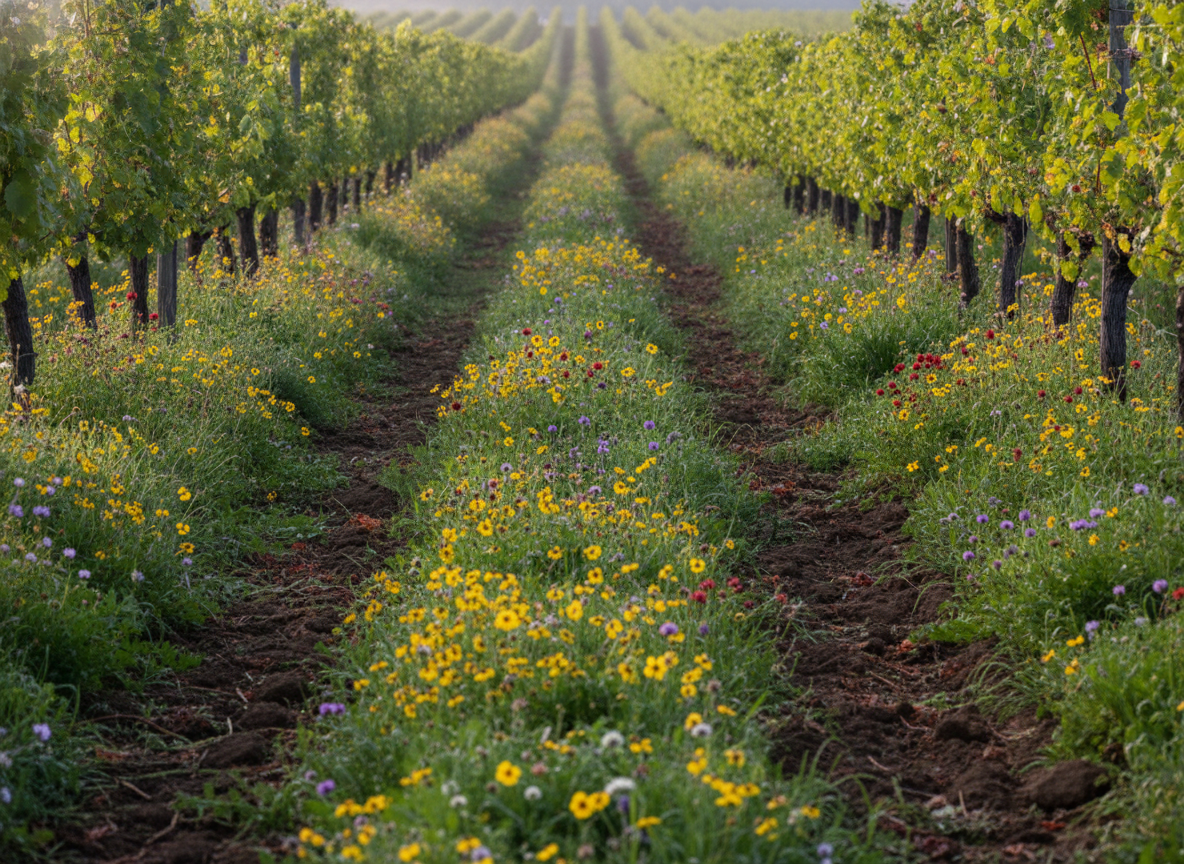
The most-discussed preparation, BD500, is fermented cow manure buried in a horn over winter and then applied at homeopathic dilution. Its evidence base is contested. What is not contested is that estates which adopt biodynamic practice tend to also farm carefully in other respects — close-spaced vines, hand-harvest, cover-cropping, native ferment — and these factors compound.
Well-known biodynamic producers
Domaine Leflaive (Burgundy) — certified biodynamic since 1997. Felton Road (Central Otago) — farmed biodynamically since the early 2000s. M. Chapoutier (Rhône) — certified across major holdings. Many other respected estates farm to organic or biodynamic standards without seeking certification.
Whether it makes the wine taste better
Probably not on its own. But it correlates strongly with the kind of obsessive farming that does. Certification is a useful signal, not a guarantee of quality in the glass.