Five regions to know, in roughly the order you should taste them.
China has dozens of wine regions across nearly every climate band, but five matter for serious wine. Here they are, briefly.
Ningxia
The most studied and best-funded region. Continental climate, dry, with the Helan Mountains creating a rain-shadow valley along the Yellow River. Cabernet Sauvignon dominates, with significant Marselan, Cabernet Gernischt (Carménère), and Petit Verdot. Best examples drink like structured Bordeaux with a Chinese accent.
Shandong
Coastal, maritime, the historical home of Chinese viticulture (Changyu was founded here in 1892). The Qiu Mountains, two hours inland, are home to the Domaines Lafite project Long Dai. Wines here have a saline, mineral character distinct from Ningxia.
Yunnan
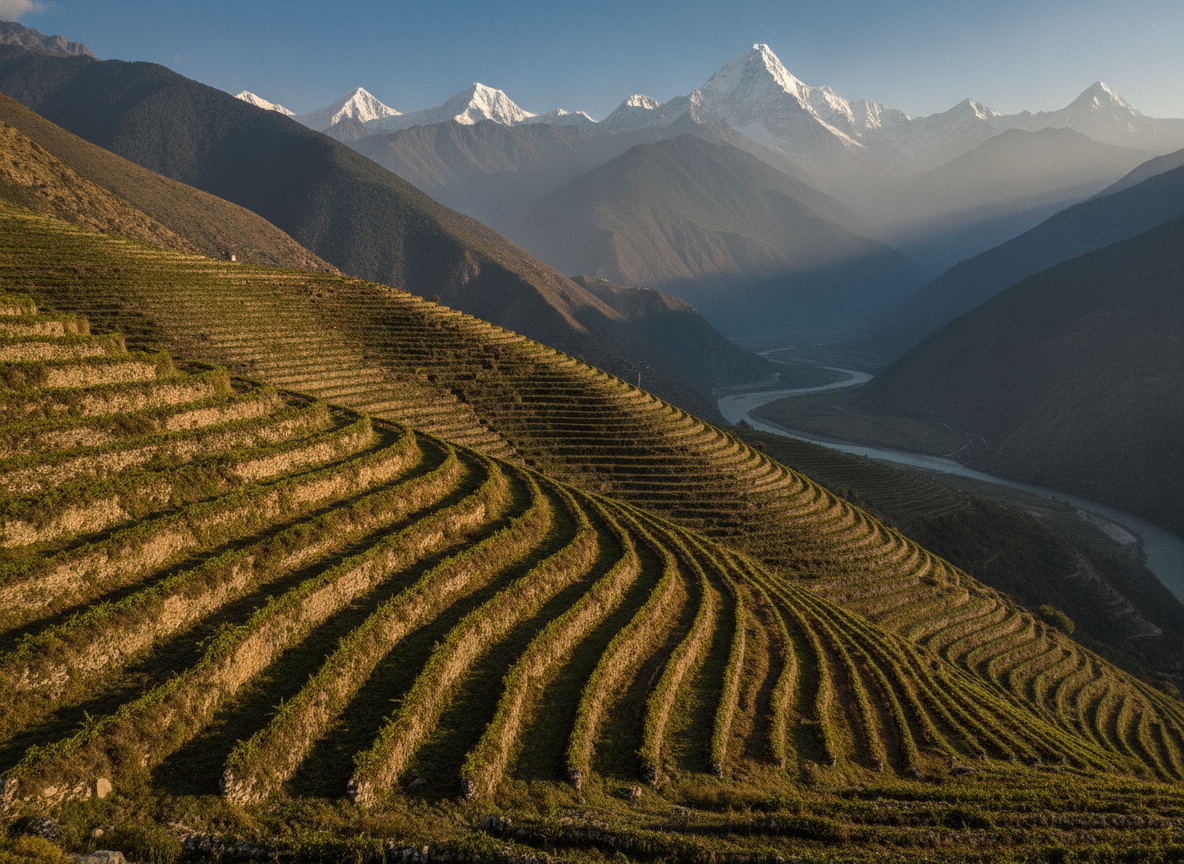
Himalayan foothills, the highest commercial vineyards in the world (over 2,200m). Floral, restrained, age-worthy reds — Ao Yun is the headline producer. Tiny volumes, allocated globally.
Shanxi
Continental, hilly, the home of Grace Vineyard — the family-run estate widely credited with bringing serious quality to Chinese wine in the 2000s. Marselan from this region is some of the most distinctive in the country.
Xinjiang
The largest planted area in China by hectarage, mostly bulk wine, but with serious quality emerging in the Yili Valley and the Turpan Basin. Worth tracking over the next decade.
If you are starting from zero: a serious Ningxia Cabernet, a Shanxi Marselan, and a Yunnan blend will give you the spread of styles in three glasses.